Temple Etiquette & Dress Code in Coastal Karnataka
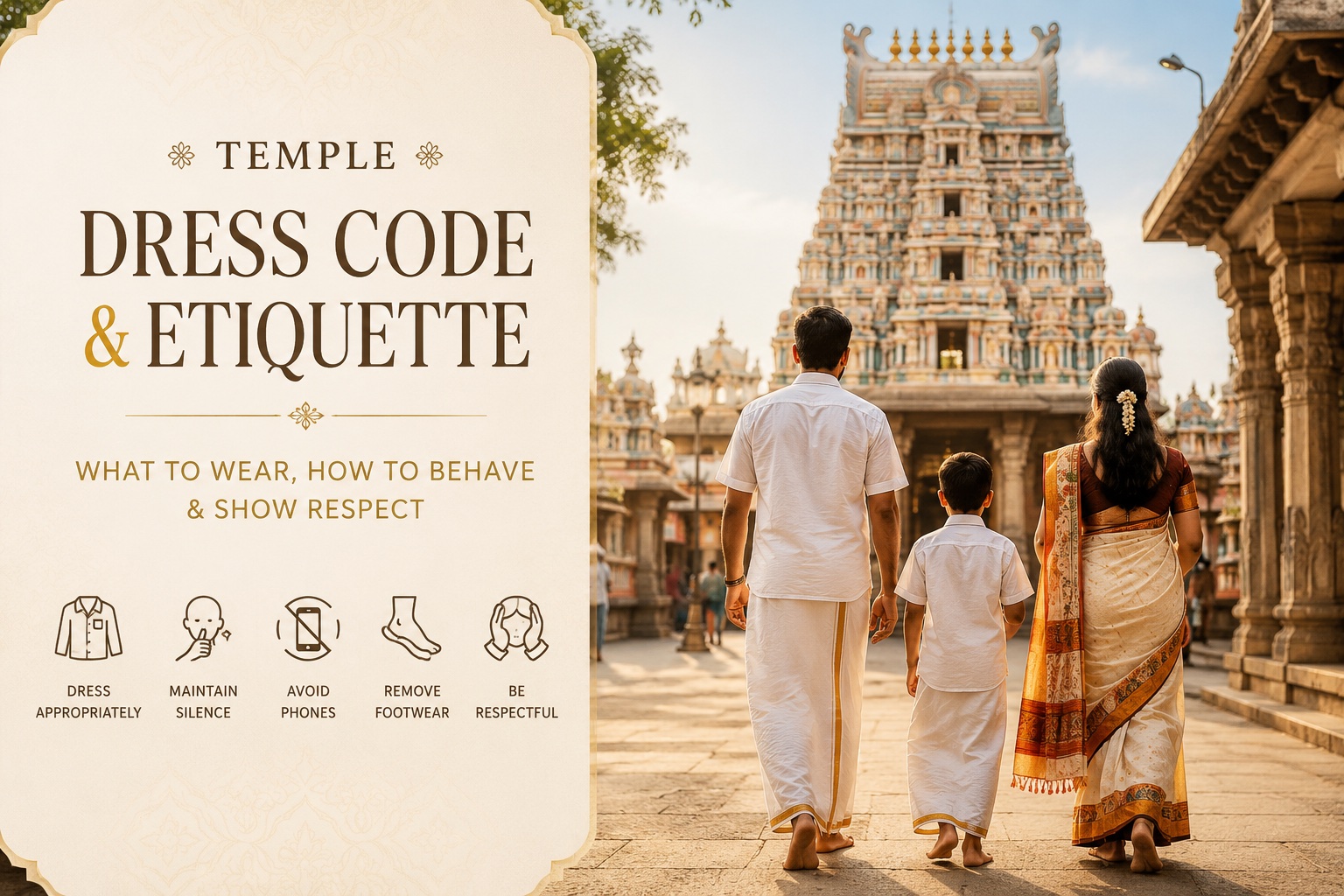
The temples of coastal Karnataka are living places of worship, not museums — and a little awareness of the customs makes your visit smoother and more respectful. Getting the temple dress code in Karnataka right, in particular, spares you being turned away at the door. This guide covers what to wear, the etiquette of darshan, photography rules, footwear and the beautiful custom of annadana, so you can visit any of the region's shrines with confidence.
The image above is representative — swap in your own regional photo later.
What to wear: the general dress code
Most temples here expect modest, traditional dress. As a simple rule:
- Cover shoulders and knees. Avoid shorts, sleeveless tops, short skirts and revealing clothing.
- Traditional is safest. For women, a saree, salwar-kameez or a long skirt and top; for men, trousers or a dhoti with a shirt.
- Keep it simple and clean. Bright, everyday traditional wear is perfectly appropriate.
Some of the more orthodox temples are stricter than others, and a few have specific requirements at the inner sanctum — so it's always wise to dress a little more conservatively than you think you need to.
Dhoti and veshti expectations for men
At several temples in coastal Karnataka, men are expected to remove their upper garment (shirt or vest) before entering the inner sanctum for darshan, and often to wear a dhoti or veshti (an unstitched cloth wrapped at the waist) rather than trousers. This is a long-standing tradition tied to ritual purity.
- Dhotis and veshtis are usually available to buy or rent near major temples if you don't have one.
- The requirement varies temple to temple, so watch what other devotees do and follow any signs or attendants.
Footwear
Footwear is always removed before entering a temple — usually well before the main building, at a designated area or stand. A few tips:
- There's often a shoe-minding stand; leave your footwear there and remember the token.
- The ground can be hot at midday or wet after rain — thin socks are a discreet way to protect your feet where they're permitted.
- Keep valuables out of your shoes.
Photography rules
Photography rules vary, but a safe default is:
- No photography inside the sanctum or of the main deity — this is almost universal.
- Outer courtyards and gopurams are often fine, but not always; look for signs.
- Phones and cameras may need to be deposited at some temples.
- Always ask before photographing people, priests or rituals.
When in doubt, put the camera away. The architecture outside is usually the photogenic part anyway — see our photographer's guide to coastal Karnataka.
Darshan and queue etiquette
- Join the queue and be patient. On busy days and festivals, darshan lines can be long; move calmly and don't push.
- Maintain a quiet, respectful demeanour inside — this is a place of prayer.
- Follow the flow. Attendants will guide you; don't linger in a way that blocks others during a busy darshan.
- Special poojas often need advance booking — for example Sarpa Samskara at Kukke Subrahmanya or Vidyarambham at Kollur Mookambika.
Prasadam and annadana customs
Two lovely traditions you'll encounter:
- Prasadam — blessed food offered after darshan. Receive it with your right hand (or both hands cupped) and treat it with respect.
- Annadana — the free community meal served to all pilgrims at many temples, most famously at Dharmasthala. It's offered in a spirit of equality and devotion; if you partake, do so gratefully, eat what you take, and follow the seating and serving customs. It's usually vegetarian and simple, and sharing it is part of the experience.
A few more courtesies
- Dress a little extra conservatively if you're unsure — you can always relax later.
- Ask, don't assume. Priests and attendants are used to helping visitors.
- Respect restricted areas. Some sanctums may be open only to certain devotees; don't take it personally.
- Carry small cash for offerings, shoe stands or a dhoti, but be wary of unofficial "guides".
Visit with someone who knows the customs
Every temple has its own quirks of timing, dress and ritual, and it helps enormously to travel with a local chauffeur who knows them — when the sanctum closes for the afternoon, where to leave your shoes, where to buy a dhoti, and how the annadana timings work. It turns a potentially confusing visit into a calm, well-paced one. If you're planning several temples, see our coastal Karnataka temple circuit.
We run each temple as a fixed, all-inclusive journey with a vetted local driver, air-conditioned car, fuel and tolls included. Browse all of our coastal Karnataka day journeys to start planning.